
"species growth"
3000 article(s) found

Planting Environment of Coffee species in Colombia
Species Morphology Editing Colombian Coffee Plant Morphology Colombian Coffee Plant Morphology (10 pieces) Colombian coffee is mainly small grain coffee. Plants are small trees or large shrubs, 5-8 m tall, usually much branched at base; old branches gray-white, nodes dilated, young branches glabrous, compressed. Leaves thinly leathery, ovate-lanceolate or lanceolate, 6-14 cm long, 3.5-5 cm wide, apex

A brief introduction to the description of the flavor, taste and aroma characteristics of high-quality coffee beans with excellent performance.
Due to the unique geographical environment and climatic conditions, Yunnan coffee has formed a unique flavor of strong but not bitter, fragrant but not strong, with a little fruit flavor. World-class coffee experts evaluate it as a good coffee in the world, and its cultivation techniques and per unit yield are also world-class. Yunnan coffee is a variant of the Arabian original species, which is generally called Yunnan small-grain coffee after long-term cultivation and domestication.
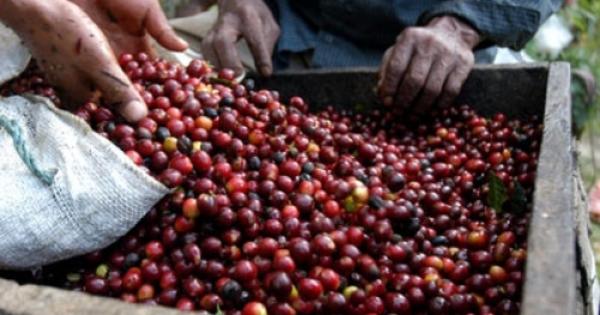
Conditions for planting coffee trees what is the growing environment of coffee trees?
Coffee belt: coffee can not be grown in any environment, because it is originally a plant growing in a tropical rain forest, and in phylogeny, it forms the habit of calm wind, cool, shaded or semi-shaded and humid environment. We call the strips on both sides of the equator between latitudes 25 degrees south and north suitable for the growth of coffee trees as coffee belts. Temperature: the requirements for temperature vary with the species of cultivation

Coffee basics two coffee varieties of coffee beans
Linnaeus (Swedish naturalist) classifies coffee plants into the Rubiaceae family, such as gardenia. The great naturalist named it Coffea. Although wild plants can grow as high as 10-12 meters, the plantations are about 3 to 5 meters high, with the exception of Colombia, where tree species rarely exceed 2 meters. This makes farming and picking easier and more economical to cultivate. Leaves

Fine Coffee learn the growing environment of coffee
Coffee is native to tropical Africa, the small seed is originated in the tropical plateau of Ethiopia, between 900 and 1800 meters above sea level, with an average annual temperature of 19C; the medium seed is native to the tropical rain forest region of the Congo, below 900 meters above sea level, with an average annual temperature of 2126. C 1. Different varieties of temperature coffee have different requirements for temperature. Small seed species need a cooler climate and an annual average temperature of 1.

Introduction to the species and Flavor of Mexican Coffee producing countries
Mexican coffee-growing areas are mainly concentrated in the southeastern highlands, near Guatemala. Most of the mountains in the south are volcanic areas, and the volcanic ash soil is not only conducive to the drainage of coffee roots, but also provides sufficient nutrients for the growth of coffee trees. Most of the coffee varieties planted are Kaddura, Tibica, bourbon, etc., and the treatment methods are mostly water washing treatment, which are classified according to altitude. Coffee beans
Introduction of coffee species
There are about 60 kinds of coffee, but there are mainly two kinds of coffee grown in commercial areas.
Fine Coffee-Yunnan small Coffee
Yunnan is the main coffee bean producing area in China. Yunnan is located in the subtropical mountain climate zone south of the Tropic of Cancer, with unique plateau red soil, fertile and loose soil and mild climate, which is especially suitable for growing small-grain coffee. Yunnan coffee was first introduced by French missionaries in 1902. Up to now, there are still 24 coffee trees with more than 90 years old in Zhukula Township, Binchuan County. Rui Lijing, 1914

El Salvador boutique coffee bean flavor and taste the characteristics of the manor producing area introduce the Santa Ana volcano area
Central American countries generally distinguish quality grades by altitude, such as Costa Rica, Guatemala, Mexico, Honduras and other countries. Similarly, El Salvador is graded by altitude. At high altitudes, due to the cold climate and slow coffee growth, the density of raw beans will be higher, the hardness will be stronger, and the unique sour feeling of Arabica will be more.

The planting environment and natural climate of coffee trees
Coffee belt: coffee can not be grown in any environment, because it is originally a plant growing in a tropical rain forest, and in phylogeny, it forms the habit of requiring calm wind, cool, shaded or semi-shaded and humid environment. We call the strips on both sides of the equator between latitudes 25 degrees south and north suitable for the growth of coffee trees as coffee belts. Temperature: the requirement for temperature varies with the species of cultivation, small
The growing environment of coffee
Coffee is native to tropical Africa, the small seed is originated in the tropical plateau of Ethiopia, between 900 and 1800 meters above sea level, with an average annual temperature of 19C; the medium seed is native to the tropical rain forest region of the Congo, below 900 meters above sea level, with an average annual temperature of 2126. C
Basic knowledge of Coffee Coffee Tree Classification and growth picking period
Coffee tree belongs to the evergreen tree of Rubiaceae. Since ancient times, most of the plants of Rubiaceae are plants with special effects, such as quinine tree, which is regarded as a specific drug for malaria, and Dugan, which is used to treat amoeba dysentery. Coffee is defined as the most unique alkaloid drinking flora. The fruit of coffee consists of outer skin, pulp, endocarp, silver skin, and seeds (coffee beans) wrapped in the innermost layers mentioned above.
Basic knowledge of boutique coffee conditions for planting coffee trees
Coffee belt: coffee can not be grown in any environment, because it is originally a plant growing in a tropical rain forest, and in phylogeny, it forms the habit of requiring calm wind, cool, shaded or semi-shaded and humid environment. We call the strips on both sides of the equator between latitudes 25 degrees south and north suitable for the growth of coffee trees as coffee belts. Temperature: the requirement for temperature varies with the species of cultivation, small
Coffee beans Coffee
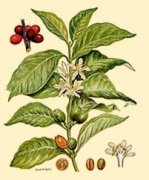
There are about 60 species of coffee in the world, of which only 25 species are cultivated to make coffee, of which only 4 species are used as commercial coffee: large fruit coffee (Coffea liberica), medium fruit coffee (Coffea canephora), small fruit coffee (Coffea arabica) and high yield coffee (Coffea dewevrei). These are botanical names. Coffee in the world at present
Basic knowledge of coffee conditions for planting coffee trees
Coffee belt: coffee can not be grown in any environment, because it is originally a plant growing in a tropical rain forest, and in phylogeny, it forms the habit of requiring calm wind, cool, shaded or semi-shaded and humid environment. We call the strips on both sides of the equator between latitudes 25 degrees south and north suitable for the growth of coffee trees as coffee belts. Temperature: the requirement for temperature varies with the species of cultivation, small

What is the Yellow Bourbon Coffee Network Coffee Bean Price Indonesian Coffee Bean varieties
It can be understood that bourbon species is a branch of Arabica species, in addition to yellow bourbon, red bourbon, orange bourbon, etc. (in addition to Kaddura, Kaduai, etc.), bourbon species were first planted in bourbon island and Ethiopia. 80-1900 meters above sea level is more suitable for the growth of bourbon coffee beans. Relatively speaking, the output of Huang bourbon is lower, but the quality is better.
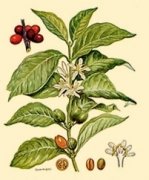
The basic concept of coffee beans
There are more than 60 species of coffee plants in the world, only 25 species are cultivated for coffee production, of which only 4 species are used as commercial coffee: Coffee liberica, Coffee canephora, Coffee arabica and Coffee deweverei, which are botanical scientific names. Coffee in the world today.
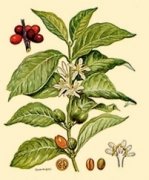
A family of coffee beans
There are about 60 species of coffee in the world, of which only 25 species are cultivated to make coffee, of which only 4 species are used as commercial coffee: large fruit coffee (Coffea liberica), medium fruit coffee (Coffea canephora), small fruit coffee (Coffea arabica) and high yield coffee (Coffea dewevrei). These are botanical names. Coffee in the world at present
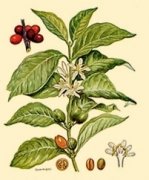
A family of coffee beans
There are about 60 species of coffee in the world, of which only 25 species are cultivated to make coffee, of which only 4 species are used as commercial coffee: large fruit coffee (Coffea liberica), medium fruit coffee (Coffea canephora), small fruit coffee (Coffea arabica) and high yield coffee (Coffea dewevrei). These are botanical names. Coffee in the world at present

The growth of a coffee bean from fruit to raw coffee bean
A coffee tree can harvest 3-5 kg of fruit, and raw coffee beans account for 1. 5% of the fruit quality. Going from fruit to raw coffee beans is really a time-consuming and laborious task. Arabian, Robusta and Liberian Arabian coffee account for about 2% of the world's coffee production. The plant is not suitable for high temperature, low temperature, more rain and less rain. Coffee beans are oval and flat, with high quality